

des Amis du Louvre
We never would have thought we would see this one day, and even during Jean-Luc Martinez’s tenure, we hadn’t seen it.. But everything happens, and from now on Friends of the Louvre are no longer welcome at the Louvre. What’s more, they have to book admission between 1 July and 8 September, and are turned away even though they can’t book online!
Let’s take the journey of a Friend of the Louvre today, 3 July 2024, from the beginning.
It is therefore compulsory for everyone, including visitors benefiting from free admission, as indicated on the museum’s website, to book online for the period, i.e. for more than two months. Even then, for Friends of the Louvre, which is already problematic, as they normally enjoy "free and unlimited access to the permanent collections and temporary exhibitions" (ill. 1). But let us assume - as we shall see later that this is probably partly inaccurate - that this is an obligation of the Police Prefecture, as the Louvre replied.

So we tried to book online [1]. It didn’t work on either Firefox or Chrome (ill. 2). We could have stopped there (and many undoubtedly do, Friends of the Louvre or not). But if you go to Safari, the site is accessible this time, although it does indicate that you need to wait "due to a very large number of connections" (ill. 3). These are problems that already existed five years ago for the Leonardo exhibition, even before the arrival of Covid (see article). Clearly, the Louvre still hasn’t made any progress in computers.
After a few minutes, we came to a screen where we could generously book... for tomorrow, 4 July (ill. 4). So not on the afternoon of 3 July when we were actually hoping to get there to take advantage of our ’free and unlimited’ access.
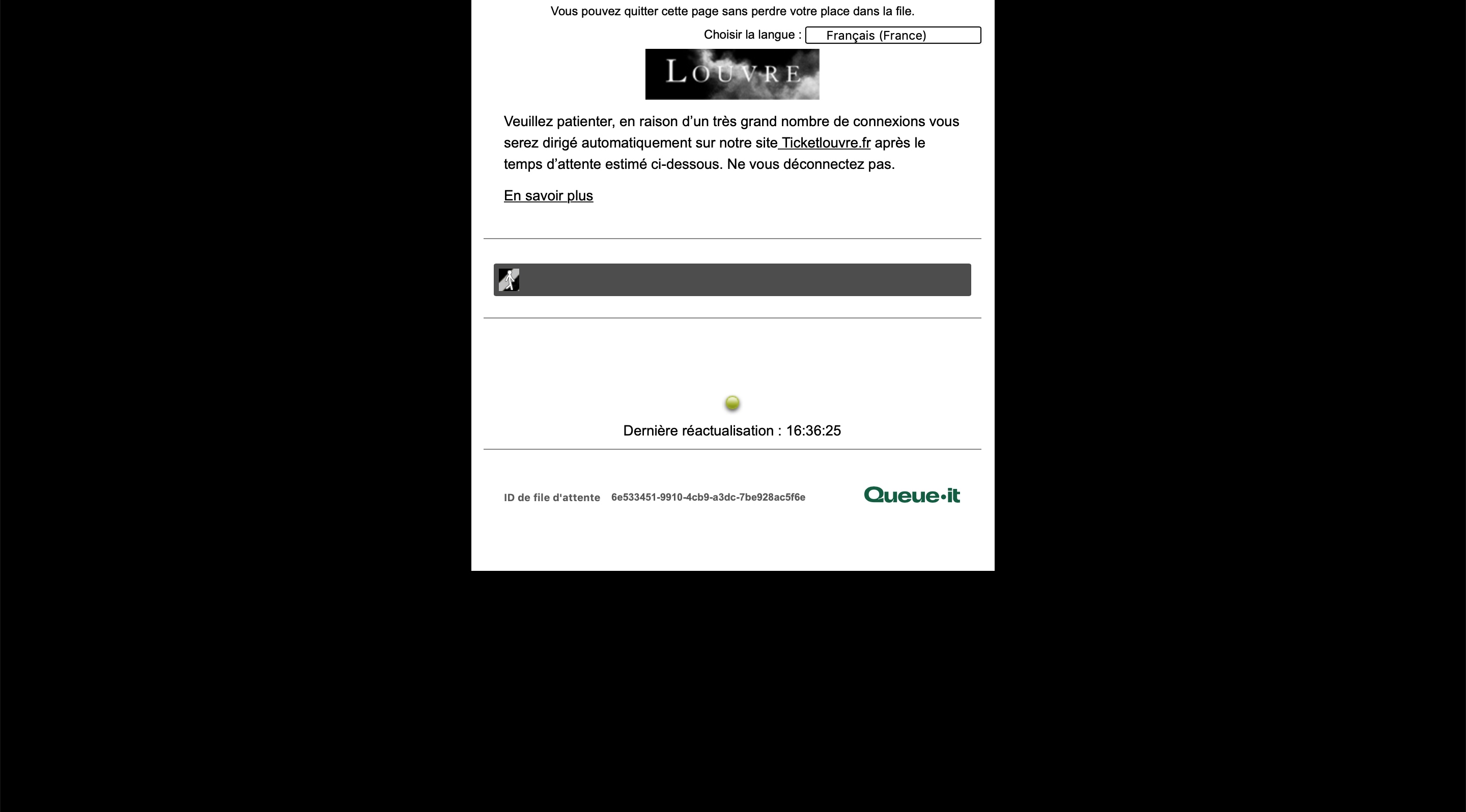
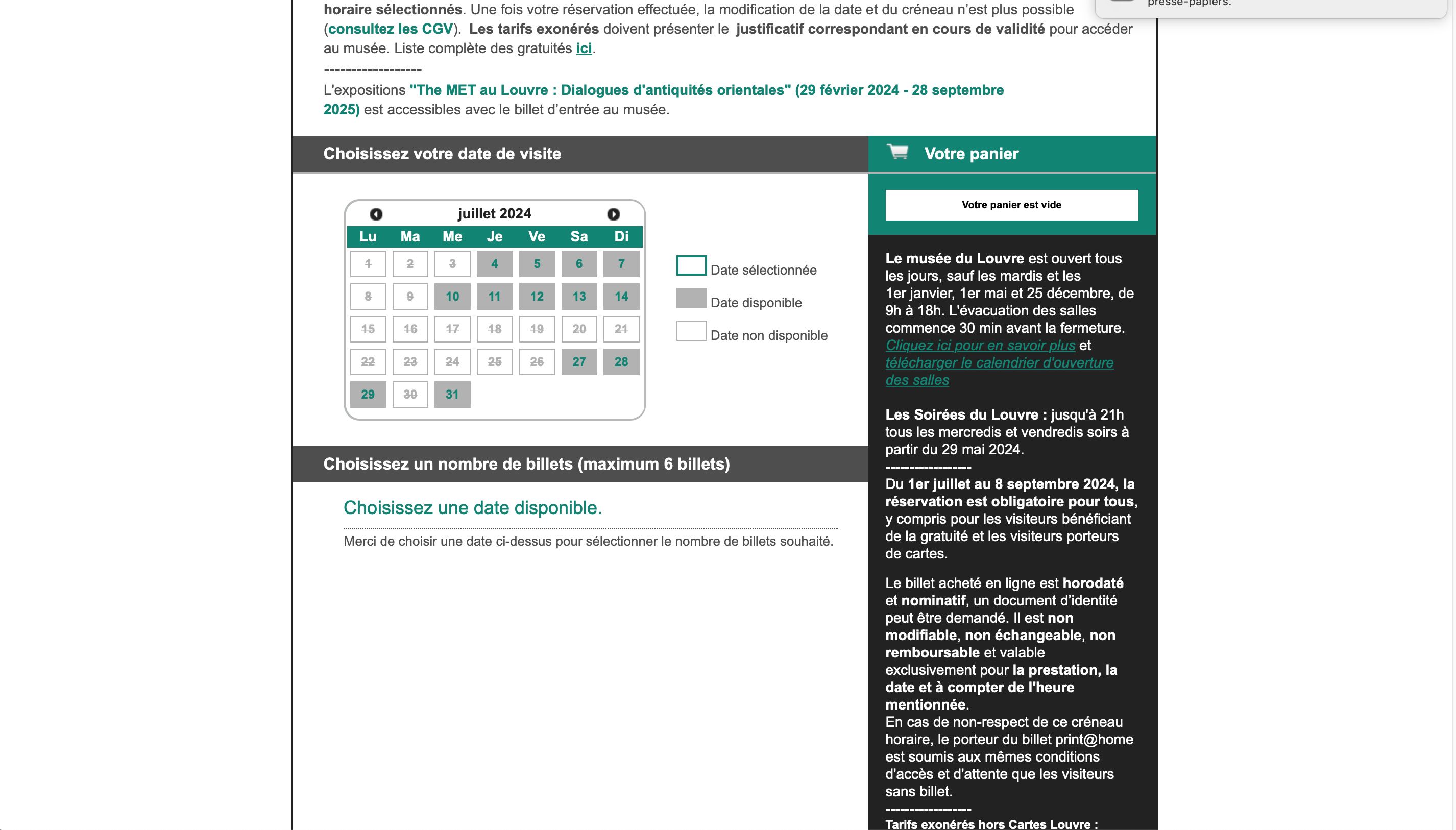
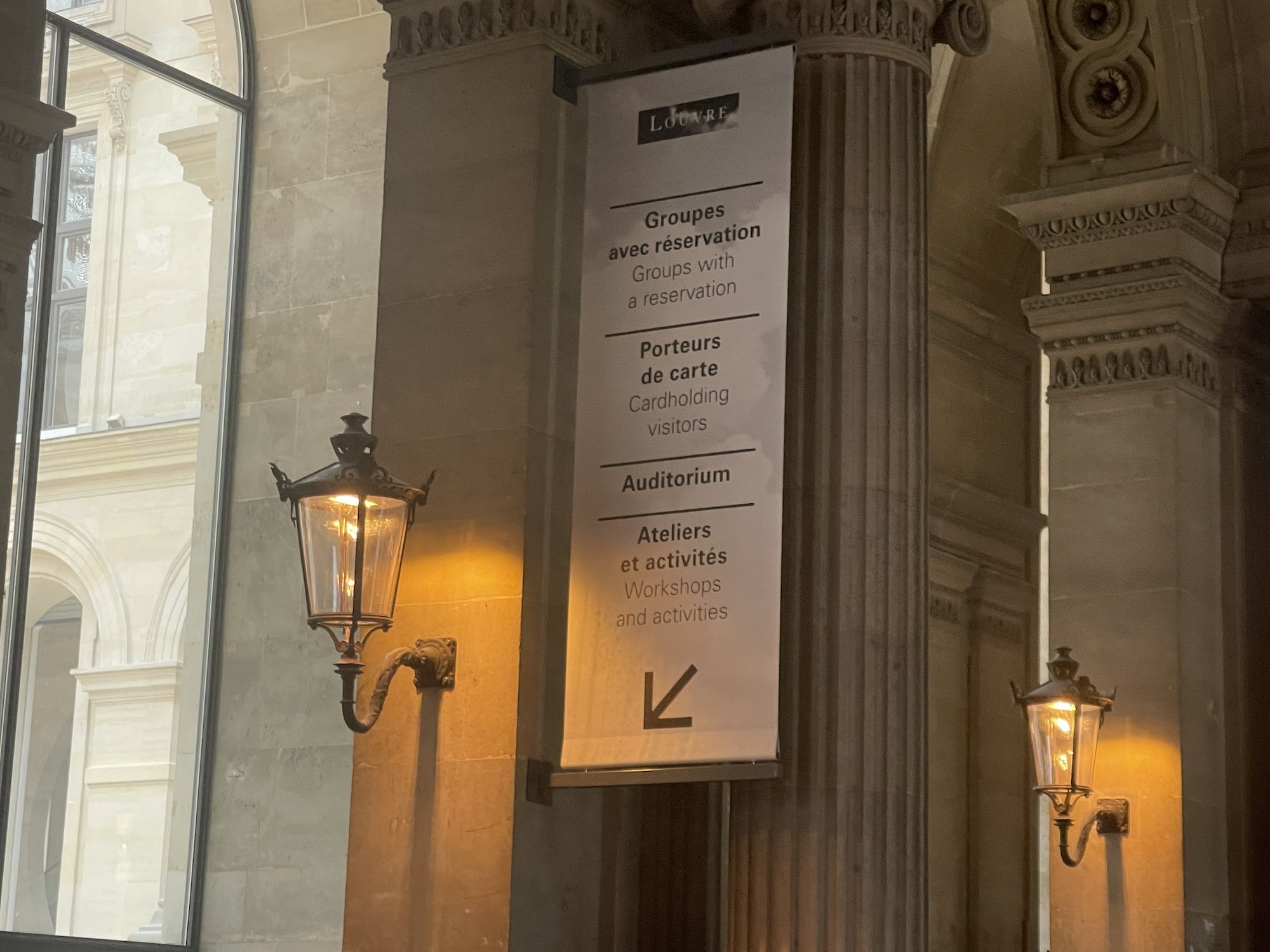
Photo : Didier Rykner
We therefore decided to go to the Louvre to try, despite everything, to get in, armed with our good faith and our card. So we went through the entrance reserved for Friends of the Louvre on the Passage Richelieu, where they never, at any time, have to queue, benefiting from the priority access to which they are also promised in the advantages to which their membership card entitles them (ill. 5).
This is impossible. The security guard, who had obviously been given instructions, refused access to anyone without a reservation. Even the Friends of the Louvre, even though there is no queue. Even if they are entitled to free, unlimited, priority admission. They are not joking about the new rules, apparently imposed by the Police Prefecture, which the Louvre is trying very hard to implement: to prevent Friends of the Louvre from entering the Louvre.
It should be remembered, of course, that even on a very busy day, the Louvre is largely empty, with visitors concentrating on the Grande Galerie, the rooms containing monumental 19th-century paintings and the Mona Lisa, as well as the Egyptian Antiquities department. There is absolutely nothing to prevent the Friends of the Louvre from visiting and limiting the number of reservations available.
It is clear, therefore, that it is the policy of the Musée du Louvre that prohibits its friends (friendship is not very reciprocal) from entering the museum, in breach of the contract that binds them, and not just the Préfecture de Police.

À quelques exceptions près, dont les Amis du Louvre...
We questioned the latter. Completely lacking in transparency, it refused to answer our questions about the constraints it imposed on museums (we asked about the Louvre and Orsay) and referred us to them for all our questions. We are therefore condemned to believe what the Louvre told us, that it was obliged to introduce compulsory reservations for everyone from 1 July to 8 September 2024 (ill. 6).
If this were true, the instructions issued by the Préfecture de Police would be completely crazy. After all, what event in the vicinity of the Louvre would prohibit people from entering the Louvre as usual, at least until mid-July? Let’s go even further: what’s to stop the Louvre from being open without a reservation, in a city that is known to be almost completely deserted by the usual tourists who visit museums, because the Olympic Games are being held on the Place de la Concorde? Indeed, only the opening ceremony on the Seine on 26 July could lead to restrictions. The museum will be closed on 25 and 26 July.
But what about Orsay? It’s not within the Concorde perimeter, but it is on the banks of the Seine. And if it does introduce compulsory booking, it will only be for a very short period, from 18 to 24 July, and it will also be closed on 25 and 26 July. So Orsay will be under compulsory booking for six days, compared with more than two months at the Louvre. How can this be justified?
The Louvre explains this length of time by "the geographical proximity of the Louvre and the Tuileries Gardens to the Concorde Olympic site", adding, as we asked about the difference with Orsay: "which is a notable difference with the Musée d’Orsay".
ne s’y trouvent, en revanche l’Orangerie est dans le secteur le plus restreint
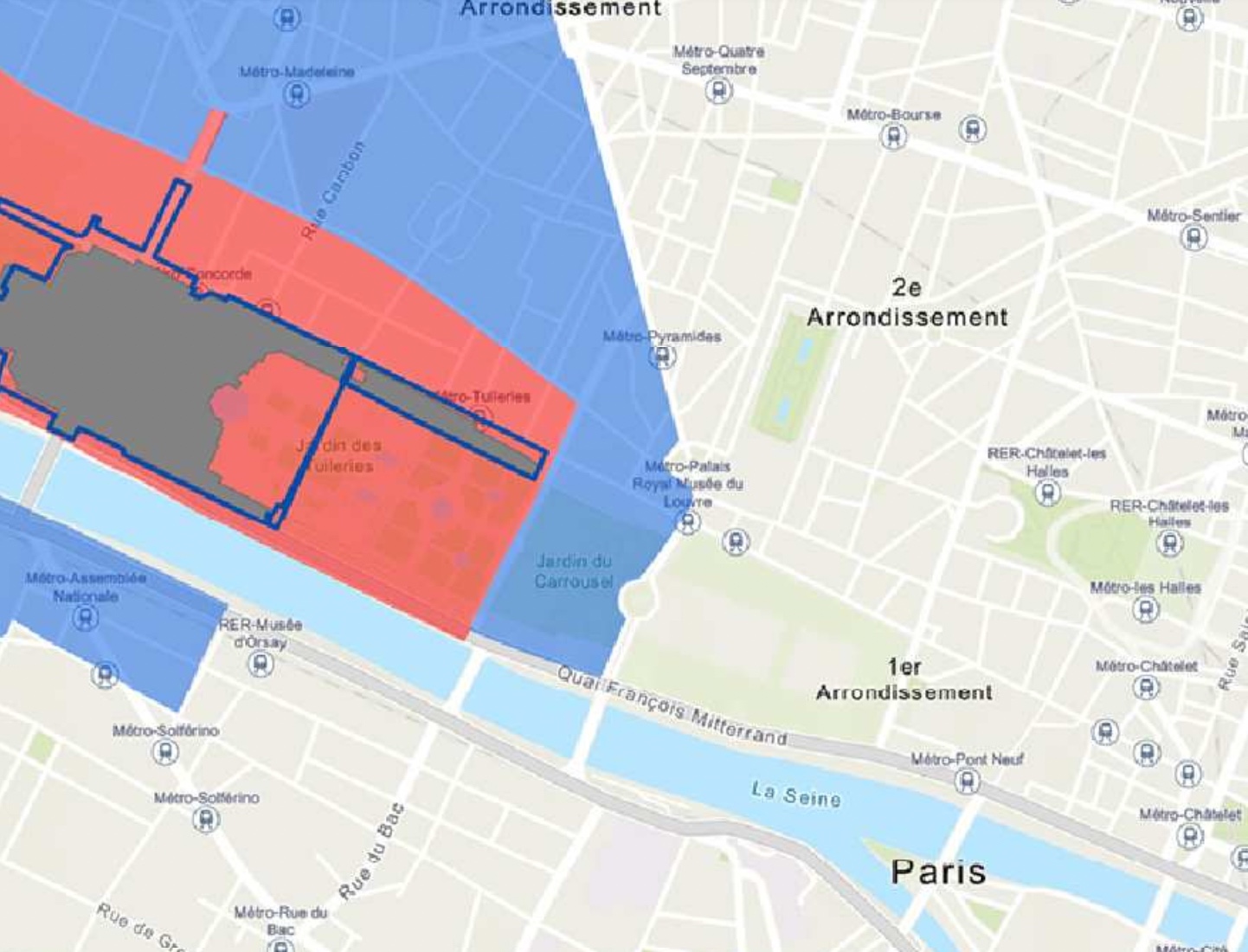
However, if we look at the "security perimeters" (ill. 7) set up for the Olympic Games, neither the Louvre nor Orsay is in a restricted area [2]. While the two wings of the Louvre beyond the Carrousel are nevertheless in the blue zone, the entrances to the museum are in an unrestricted zone. And the blue perimeter does not prohibit any pedestrian traffic (ill. 8). The only restriction concerns vehicles entering the area, which have to show proof of a reason for doing so by means of a document they sign themselves (it’s like being back in the good old days of Covid). Clearly, visiting the Louvre isn’t a good enough reason (as we might have guessed), but why does that make booking compulsory? The Louvre and the Police Prefecture have been unable to provide us with any real justification, other than, in the case of the Louvre, "the context" and the need to "guarantee the best possible conditions for security and visits, to limit potential queues as much as possible and to facilitate access to the museum". And there are even fewer reasons for the much stricter conditions imposed by the Louvre, compared with the Musée d’Orsay.
Where is the consistency? And who is responsible for these absurd decisions? The Préfecture de Police, as the Louvre tells us? Or the Louvre, as the Police Prefecture suggests by refusing to answer our questions? Probably both, and I quote the Louvre, "working[in] very close collaboration with the Police Prefecture on the issue of welcoming and ensuring the safety of the many visitors expected".

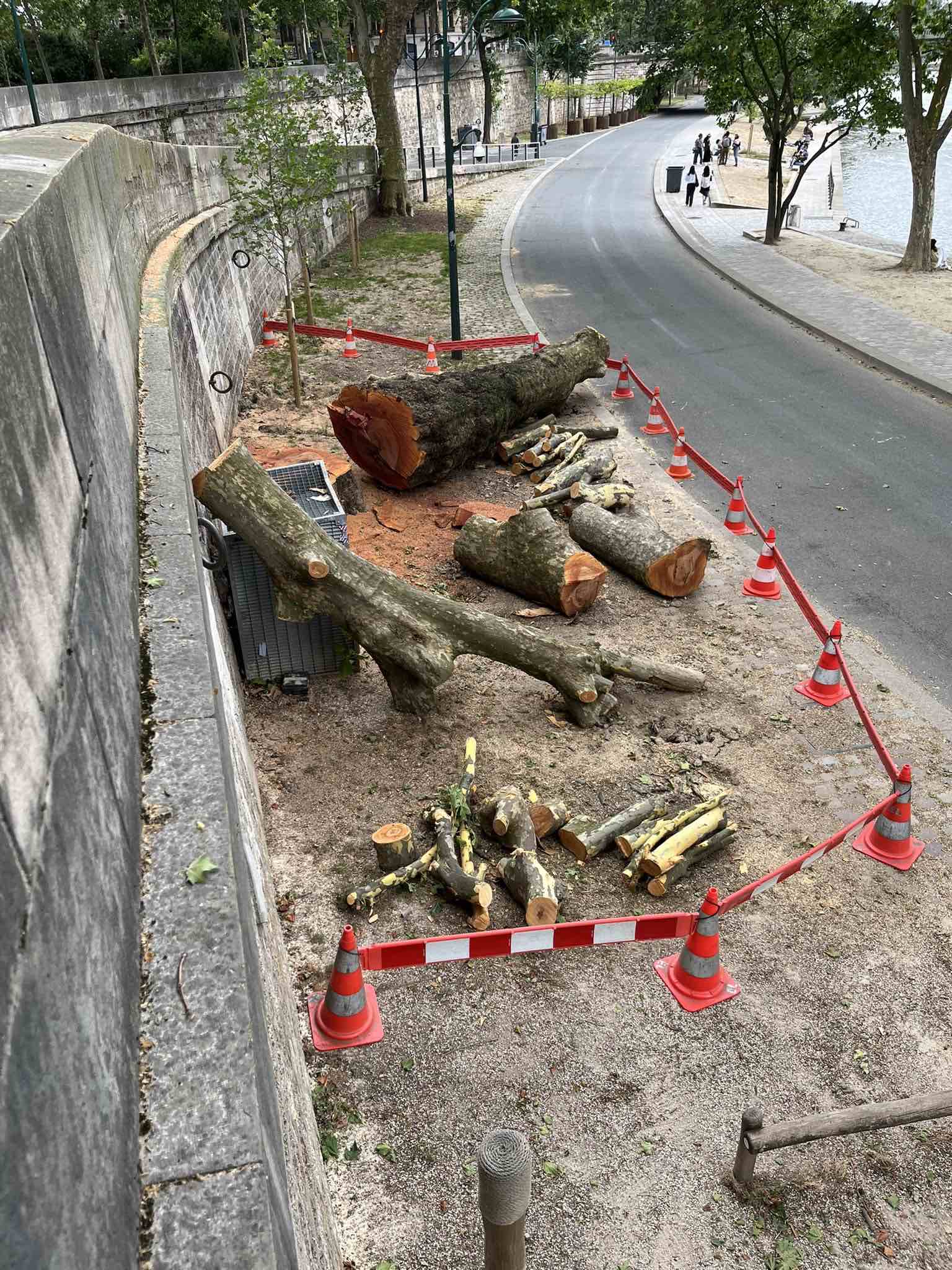
Photo: @marvismjacuzzis
It’s all absolutely crazy, and all the more part of the vast chaos that is the Olympic Games. Olympic Games that have also just led to the felling of several large trees (ill. 9) on the quays of the Hôtel de Ville. These were "sick" trees, of course, as Paris City Hall announced to the public outcry, even though they were not on the municipality’s map of sick trees. It’s only a short step from there to thinking that these trees were cut down to make it easier to organise the opening ceremony on the Seine (which is unlikely to be held there because the current is too strong and the pollution too heavy), a step that we’ll happily take when we know how Paris City Hall treats trees.
Yes, the Paris 2024 Olympic Games will be a great cultural and ecological celebration!