
Subscriber content
Amber Treasures from the Baltic Sea 16th - 18th century
Paris, Galerie Kugel, from 18 October to 16 December 2023.
The material gleams and glows, seduces and fascinates: rarer on the banks of the Seine than on those of the Baltic Sea, amber certainly deserved this exhibition as beautiful as it is learned, which unfolds in the beautiful Neue Kammern of the Kugel gallery. Fitted out by decorator Alain Demachy and inaugurated in autumn 2017, these spaces, skilfully transformed into a cabinet of curiosities, are the ideal setting for the fifty or so pieces assembled over several decades. Alexis and Nicolas Kugel assure us: this is the exhibition that required the most delicate preparation. After goldsmiths from Strasbourg (see article), clocks from Augsburg (see article) and - more recently - Neapolitan tortoiseshell (see article), the Kugel gallery leads its visitors on the road to amber, the gold of the North that appeared on the first printed maps of the Prussian coast in the 16th century. Specialists or readers of the recent book by Pierre-Ange Salvadori know that the scientific name for Baltic amber - succinus - was already indicated on the strip of land separating Danzig and Königsberg [1] in the famous Carta marina of 1539 drawn up by the last Catholic archbishop of Sweden, Olaus Magnus. Amber, however, derives from an Arabic term, and its origin aroused every kind of fantasy until the 17th-century, when the Russian scientist Mikhail Lomonossov definitively demonstrated that it was a resin secreted by trees and then fossilized. The exhibition’s rich catalog also tells the story of amber harvesting, the role of the Teutonic Knights and the fate of coastal populations forced to collect amber after every storm without being allowed to keep any, on pain of fine or even death in the 16th century.
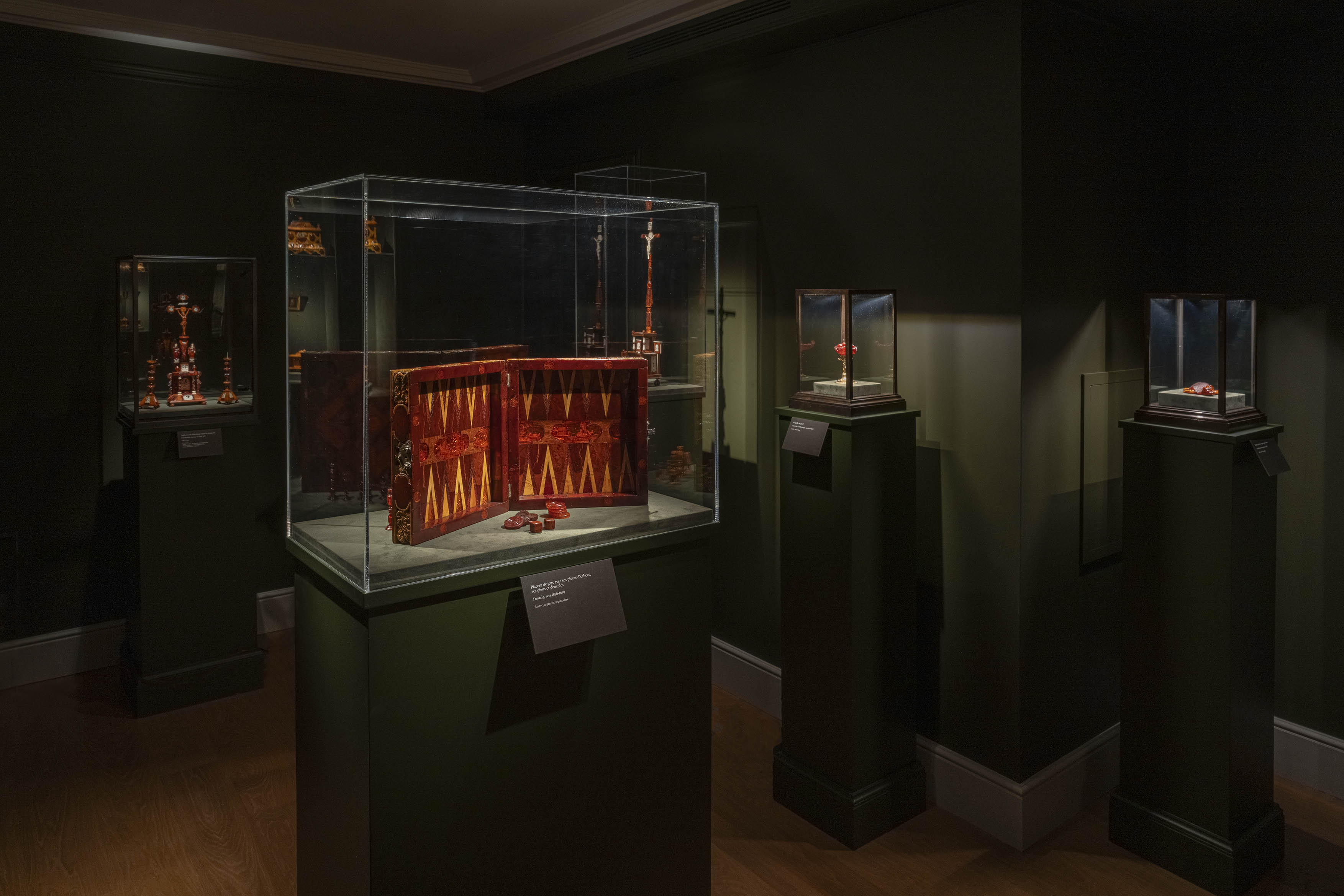
Photo: Guillaume Benoit
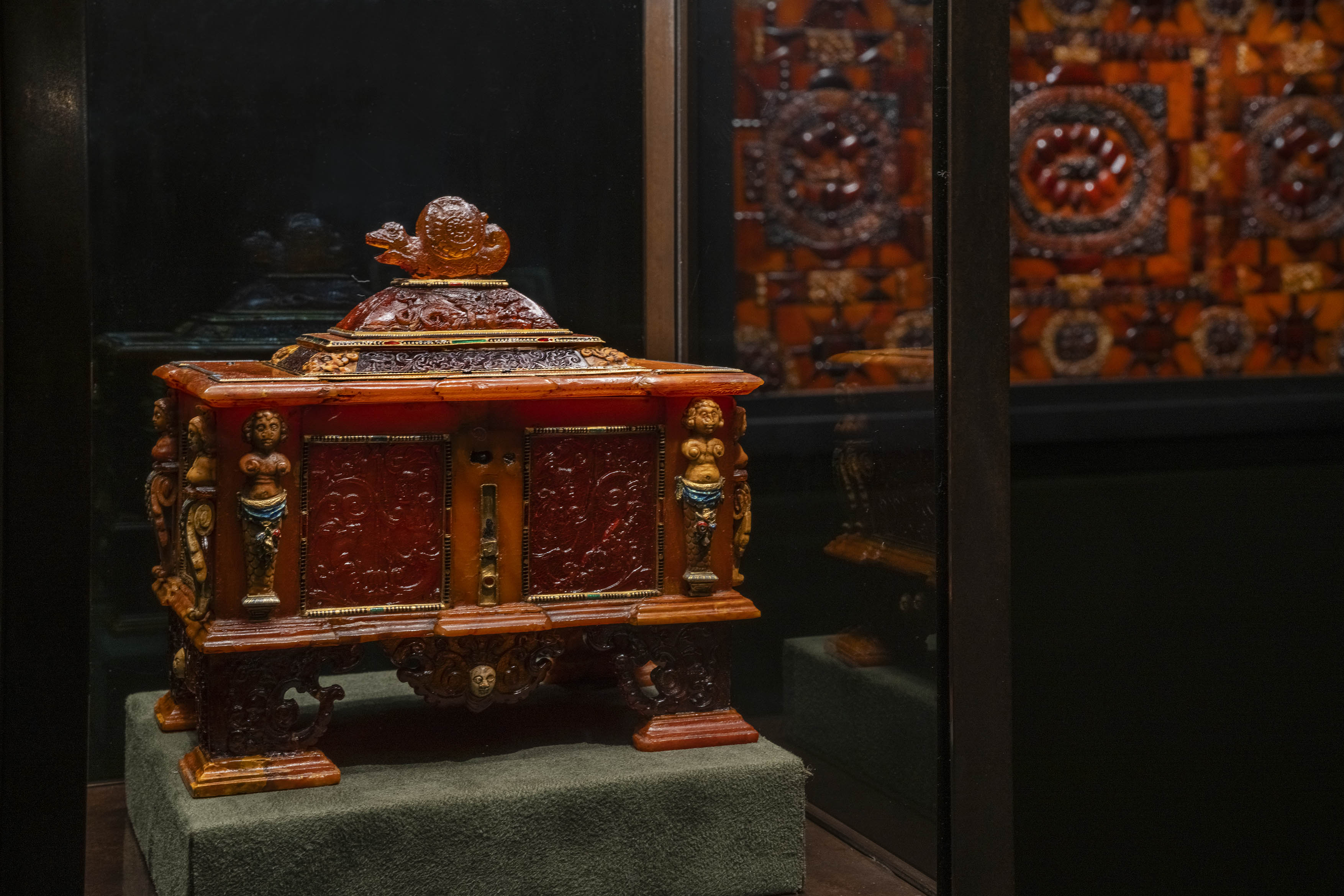
Photo: Guillaume…