
Subscriber content
The new heroes. Paul Richer and the sculpture of work
Les nouveaux héros. Paul Richer et la sculpture du travail
Chartres, Musée des Beaux-Arts, du 23 septembre au 31 décembre 2023.
We reported extensively on our pages that, after years of torpor, the Musée des Beaux-Arts de Chartres narrowly escaped permanent closure in 2017 (see articles). What would happen next remained unclear. The museum, for which a Scientific and Cultural Project was being drafted, would remain open during the renovation work, which would probably begin in 2019 or 2020, for a budget that was not made public. Six years later, although the museum has remained open, it is still awaiting renovation. The timetable for future operations - which should still not prevent the museum from remaining open - has not yet been defined, as the architectural and museographic programme - concerning the Episcopal Palace and the outsourced storerooms - is still being drawn up. A major change, however, is that a new director, Gregoire Hallé, has been appointed in March 2021, leaving the supervision of the renovation of the Musée des Beaux-Arts de Draguignan (article to follow) - his first post after graduating from the INP - to take up the post of director of the Musée Chartrain.
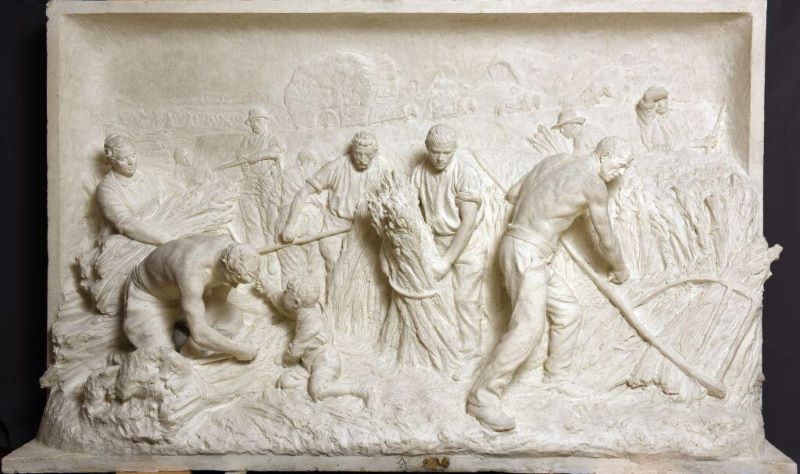
The Harvest, Salon of 1893
Plaster - 174.5 x 107.5 x 39 cm
Chartres, Musée des Beaux-Arts
Photo: Chartres, Musée des Beaux-Arts
Since then, work has begun on the collections, resulting in uninterrupted restoration campaigns since 2022. In spring 2023, the exhibition Trésors révélés [1] presented a selection of recently restored paintings, sculptures, objets d’art and ethnographic objects - to which we will return in a later article, which will also focus on some of the recent acquisitions made by the City of Chartres - but at the end of this year we are revealing another body of work that had been lying dormant in the reserves: the collection of sculptures by Paul Richer, which had been kept there since the artist’s widow made a donation in 1934. These sculptures bring to light an artist who is largely unknown today, even in his…