
Subscriber content
Big clean-up at Saint-Eustache, or just big nonsense?
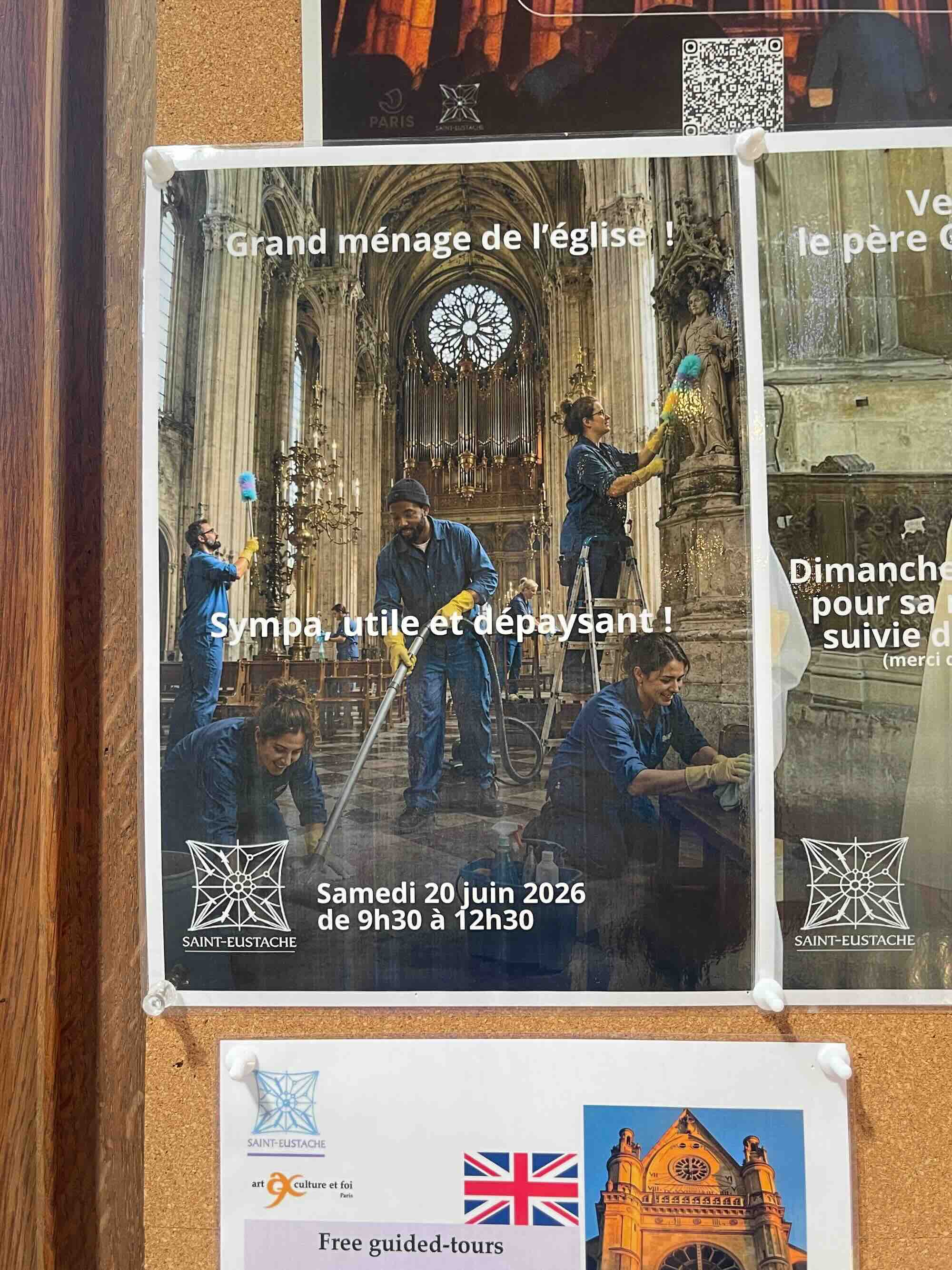
Photo: Didier Rykner
Being treated by a priest, in his own church, as a “fouille-merde” (sic) [1] because one explains to him that what he is doing is contrary to the law and dangerous for works of art, is an unprecedented experience, which the author of these lines experienced last Saturday. The parish priest, Pierre Vivarès, had in fact called on Instagram (and through a poster placed on a noticeboard in the ambulatory - ill. 1) for a “big clean-up of the church!”. The visual, clearly, was generated using artificial intelligence, and it showed five people in work overalls, two of whom were cleaning works with a feather duster.
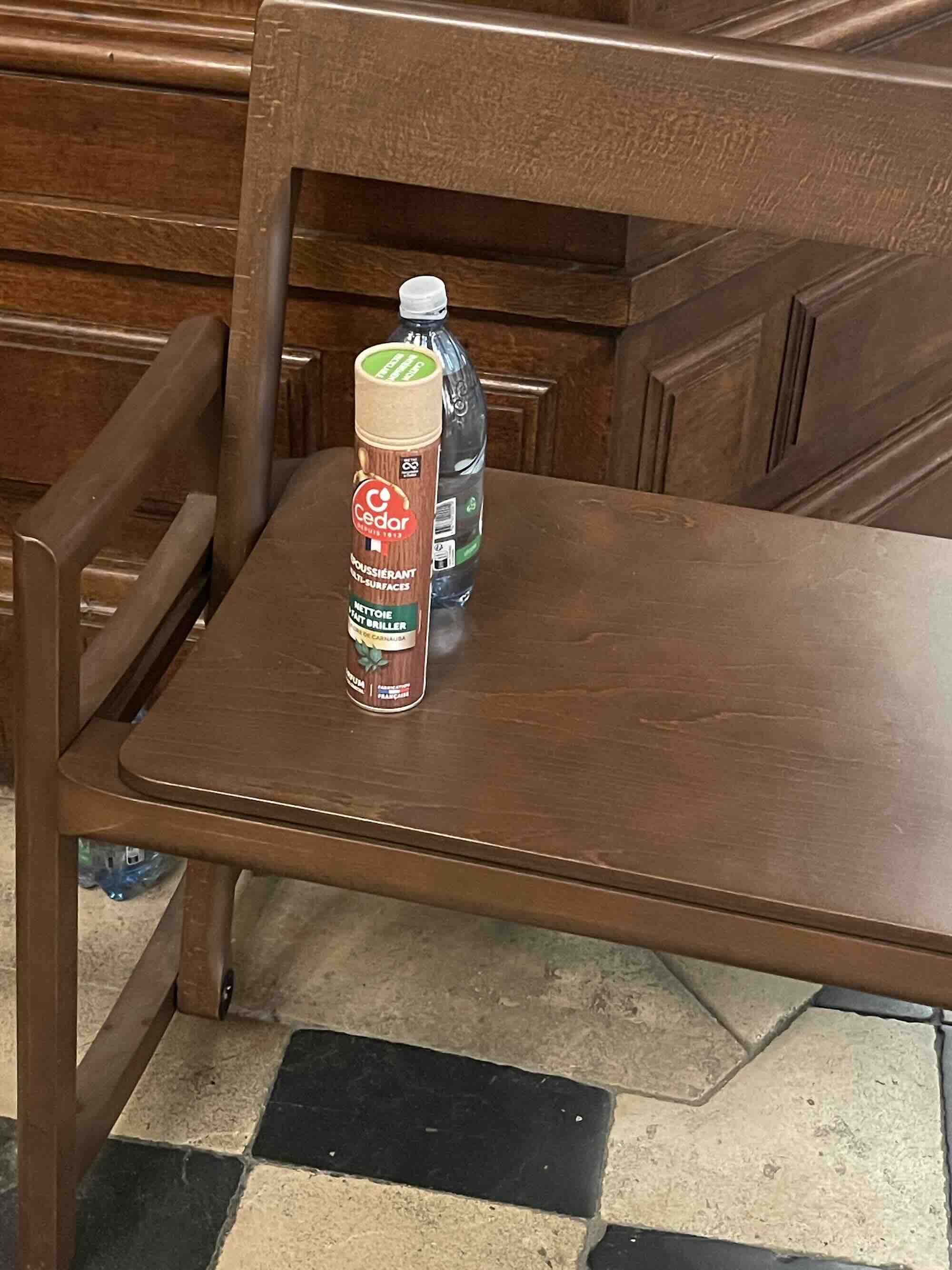
Photo: Didier Rykner
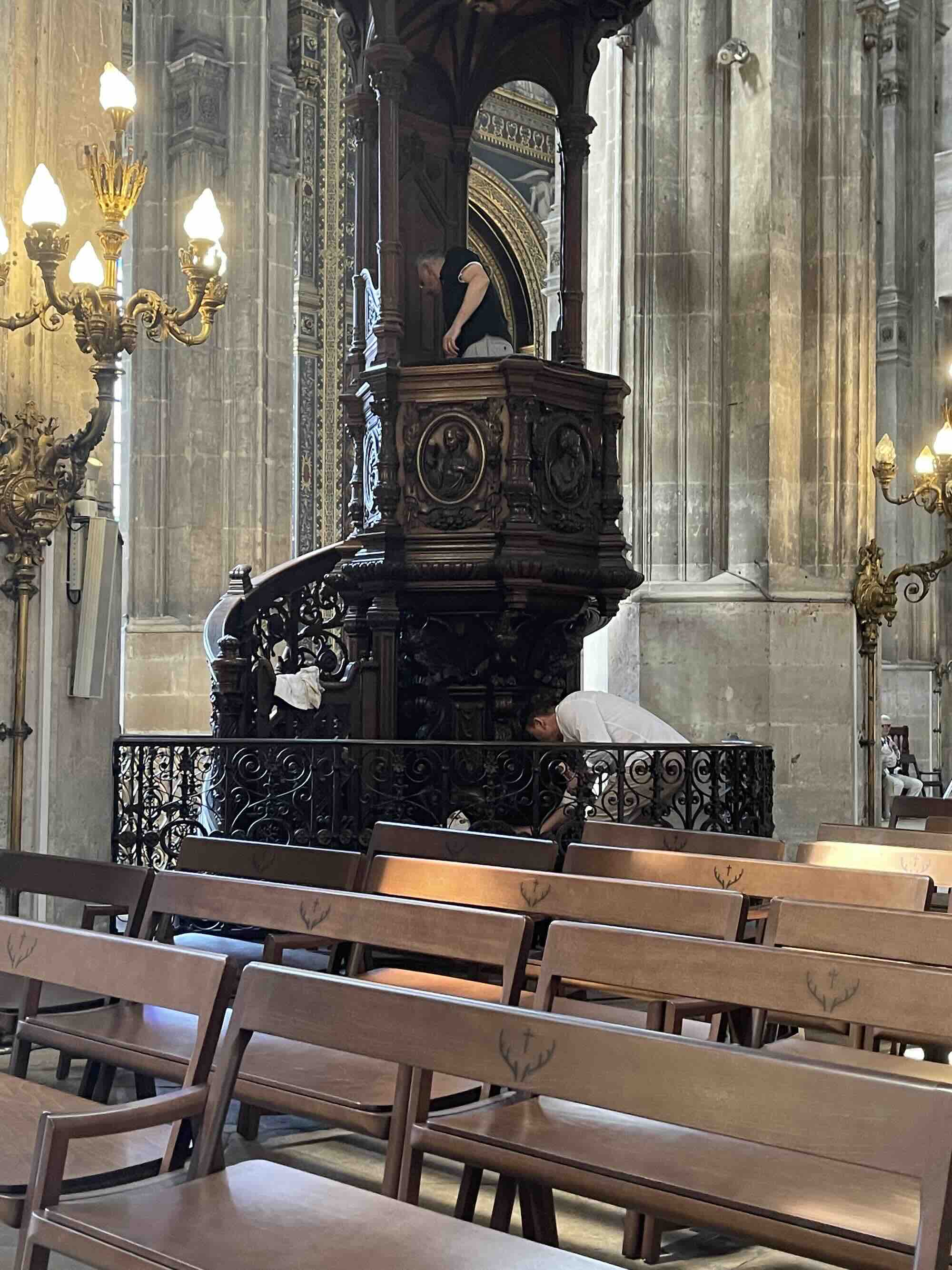
Photo: Didier Rykner
If it had only been a feather duster, it would not have been too serious. But this went far beyond a feather duster. We were able to observe that most of the volunteers were using a spray product, Ocedar multi-surface dusting spray (ill. 2), which they applied with a cloth to a considerable number of works and decorative elements.
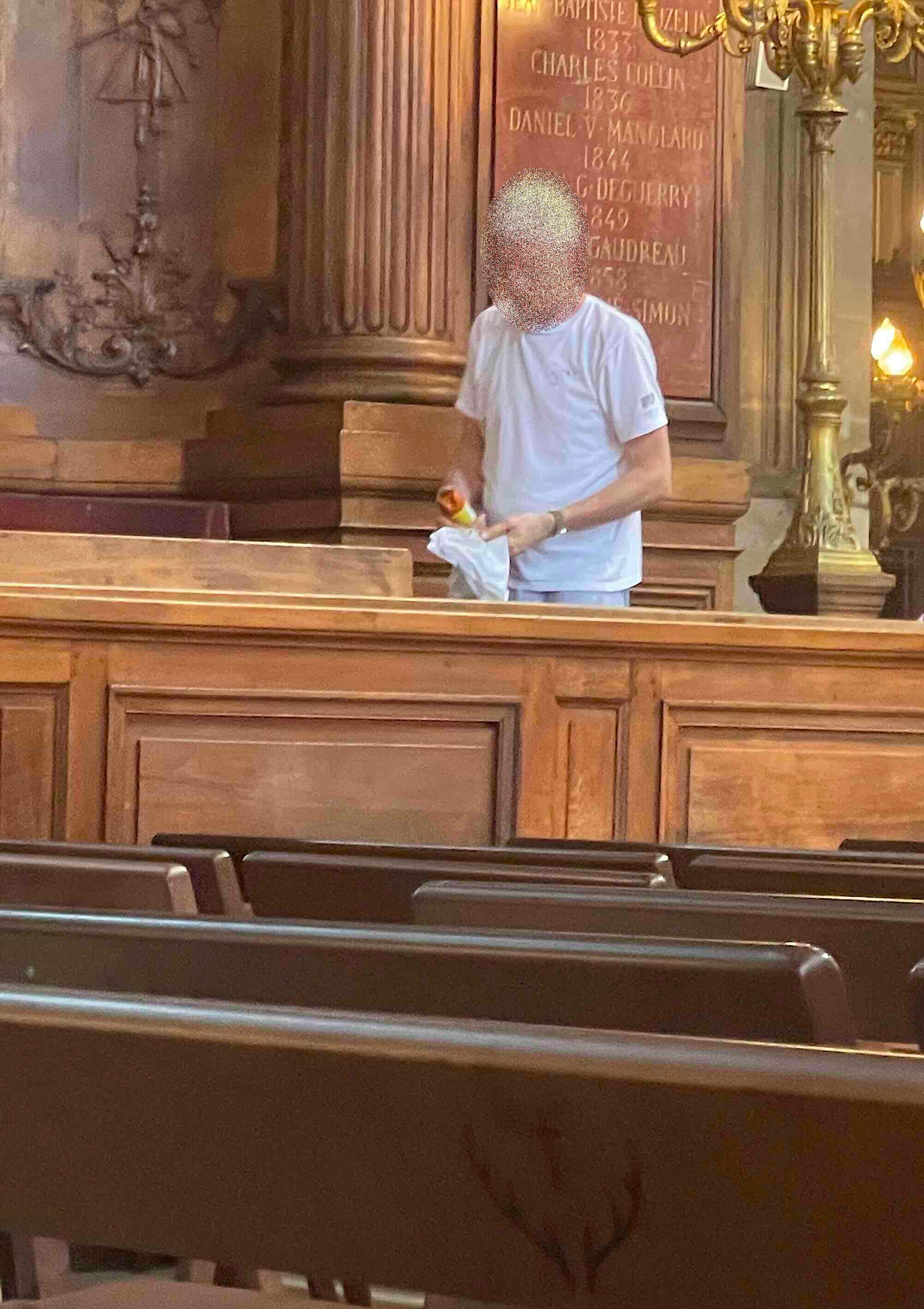
Photo: Didier Rykner
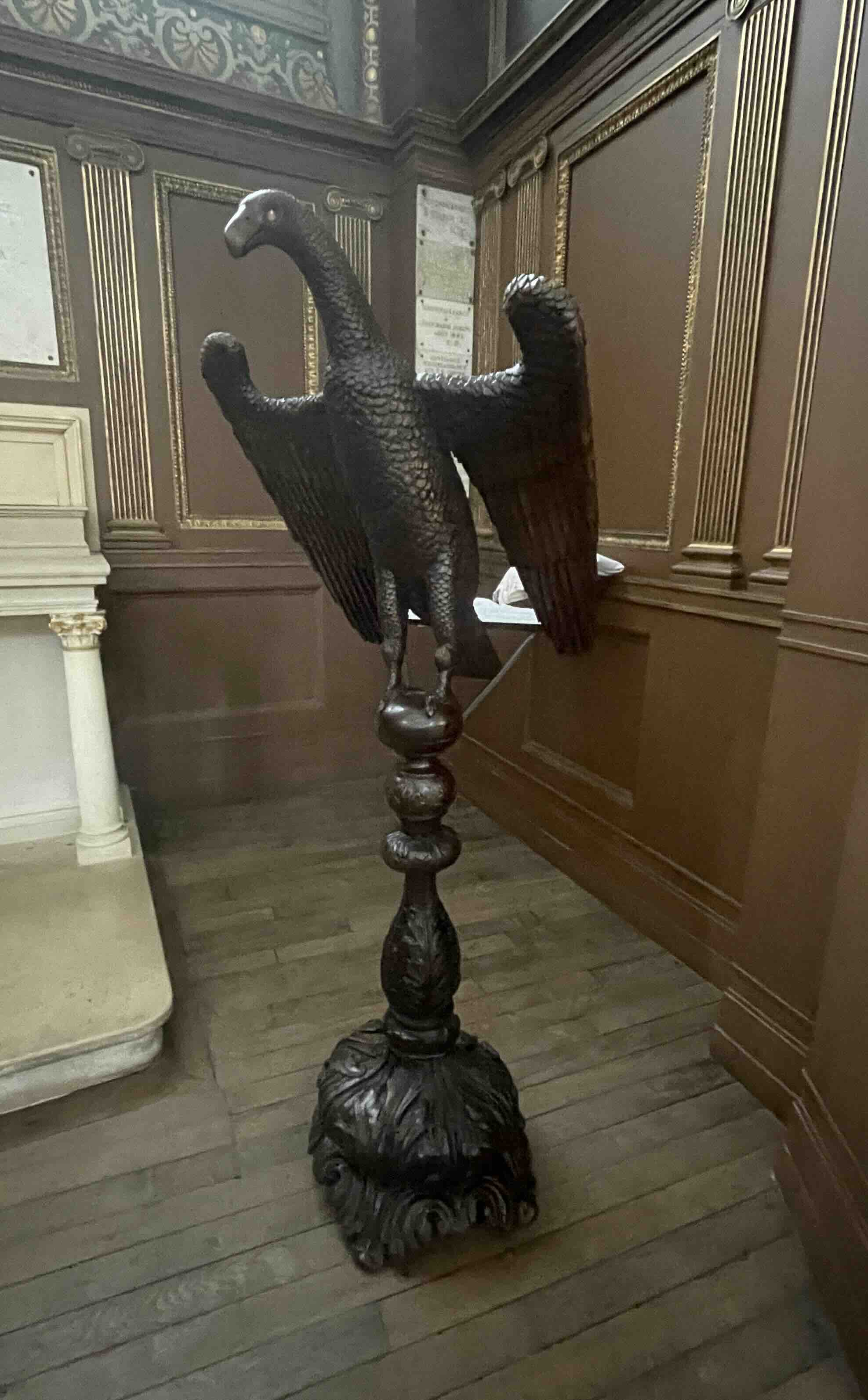
Photo: Didier Rykner
Everything was affected: the choir and apse rooms, the confessionals, the pulpit designed by Victor Baltard (ill. 3), the…