Contenu abonnés
Un témoin du goût de Marie-Antoinette entre au Louvre
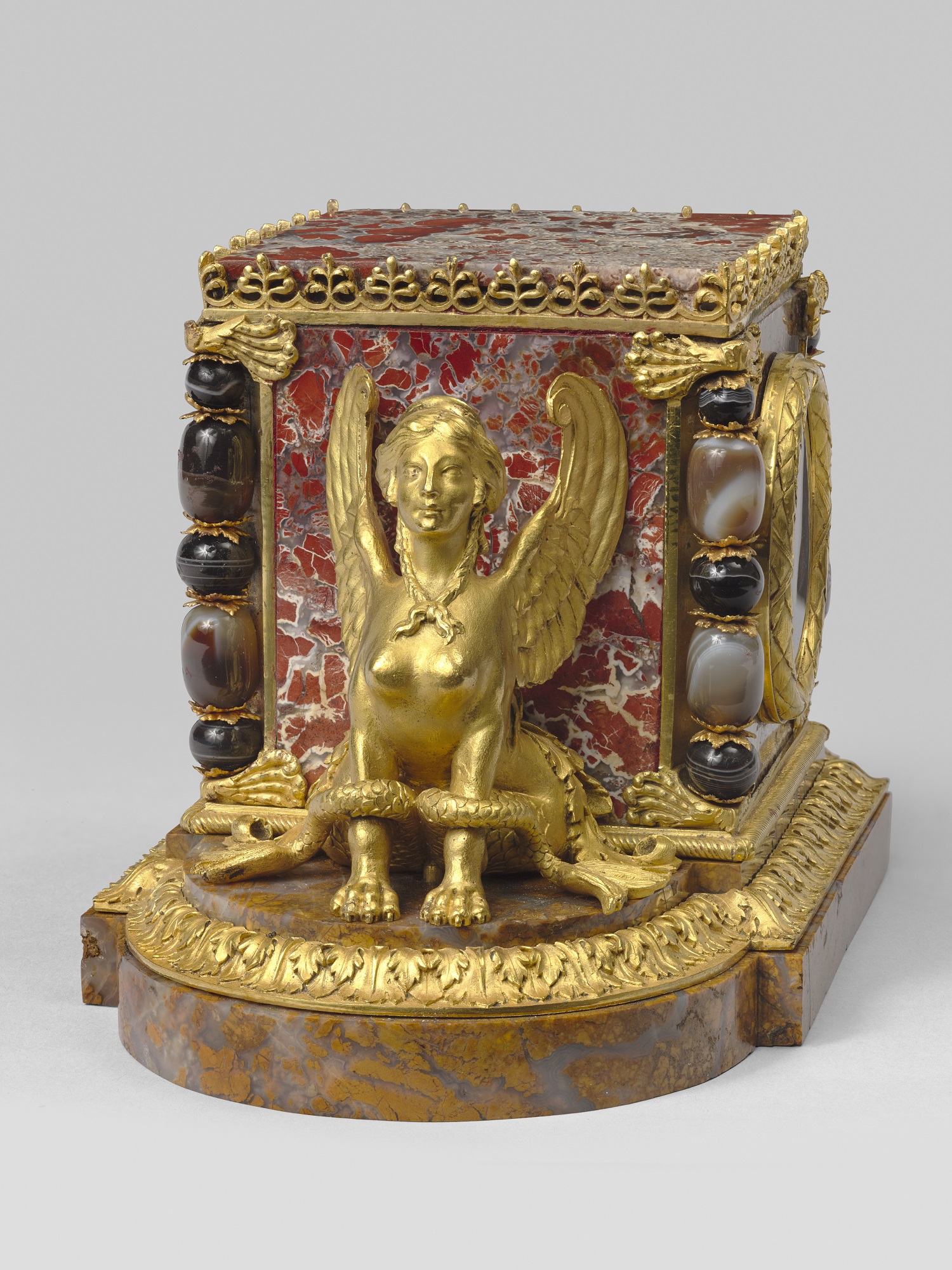
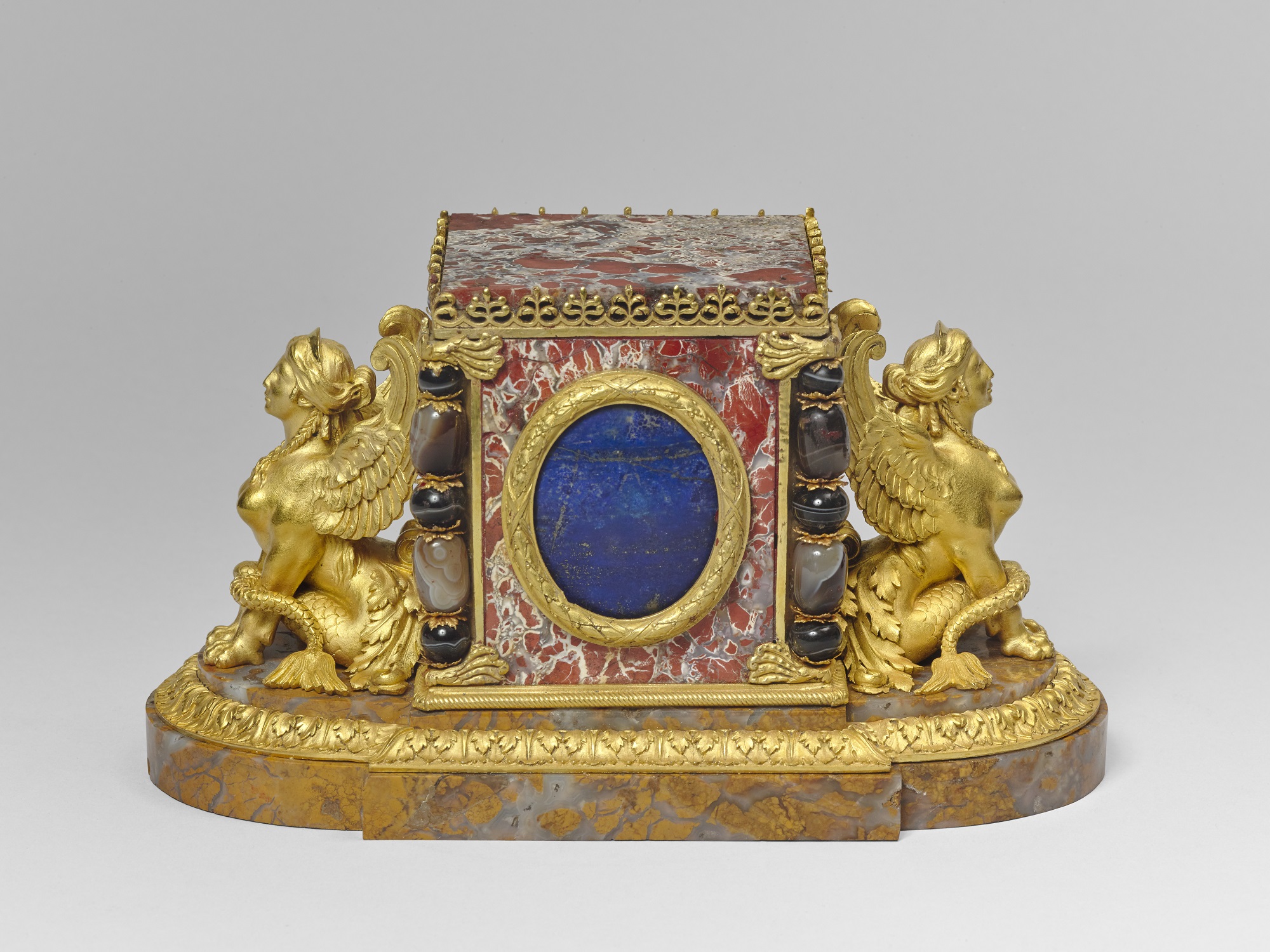
Socle d’un vase en sardoine de la reine Marie-Antoinette, 1784
Pierres dures (jaspe rouge et jaune de Sicile, sardoine, agate, lapis-lazuli) et bronze doré - 11 x 10,8 x 20 cm
Paris, Musée du Louvre
Photo : Hervé Lewandowski
27/7/23 - Acquisition - Paris, Musée du Louvre - La précision toute mécanique de certains inventaires révolutionnaires laisse parfois une place considérable à l’imagination et il fallait ainsi - jusqu’à récemment - se contenter de rêver en lisant une telle description : « un socle carré, formé de plaques de jaspe rouge et blanc de Sicile, orné aux quatre coins de grains de chapelets de sardoine onyce et rubanées [...] sur les deux autres côtés sont des sphinx, le tout porté sur une plinthe de jaspe jaune et blanc de Sicile et monté en bronze doré d’or mat d’un très beau travail ». Ce qui aurait pu rester à l’état de songe s’est pourtant concrétisé il y a quelques semaines lorsqu’un passionnant objet (ill. 1, 2 et 3) a discrètement pris place dans l’une des plus jolies vitrines du département des Objets d’art, celle qui rassemble les derniers vestiges de la fabuleuse collection de vases en pierre dure de la reine Marie-Antoinette. Loin de l’hystérie qui touche pourtant volontiers toutes les actualités liées de près - ou, plus souvent, d’assez loin - à la souveraine guillotinée, ce petit miracle n’a curieusement pas bénéficié d’un battage médiatique excessif, cette brillante acquisition restant cantonnée à un bref article publié au début du mois de juin dans Grande Galerie, le Journal du Louvre.